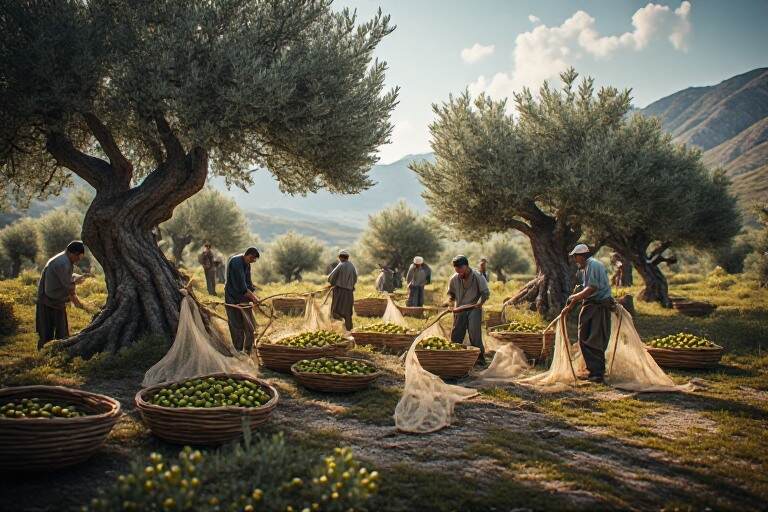
The olive harvest is one of the most important traditions in Crete, bringing families, friends, and seasonal workers together in the island’s olive groves. From autumn into winter, people spend long days picking olives, spreading nets, moving between trees, and collecting the fruit that will eventually become Cretan olive oil. The work can be tiring and repetitive, so traditional music and singing have long been a natural part of rural life. There are not necessarily special songs written only for the olive harvest; instead, workers can sing familiar Cretan songs and improvised verses that make the long working hours more enjoyable.
Mantinades: singing and improvising verses
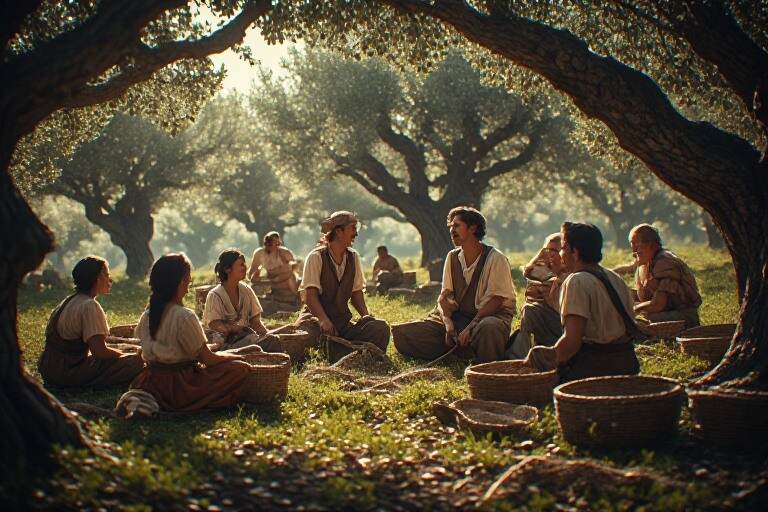
One of the best-known forms of Cretan musical expression is the mantinada. These are short, rhyming verses traditionally written or improvised in the fifteen-syllable poetic meter associated with Cretan culture. Mantinades can express love, friendship, humor, sadness, everyday experiences, or observations about life. During a day in the olive grove, the verses can easily become connected to the work itself, the weather, the people helping with the harvest, or even the hope of producing excellent olive oil.
Mantinades can also become a playful exchange between people. One person may sing a couplet, while another responds with a rhyming verse of their own. This makes the singing interactive rather than simply something performed for an audience. In a busy olive grove, such improvisation can help keep spirits high and bring some humor to an otherwise demanding day.
Here is a short clip featuring traditional Cretan music, giving you a taste of the sounds and musical traditions of Crete:
Rizitika and the sound of western Crete
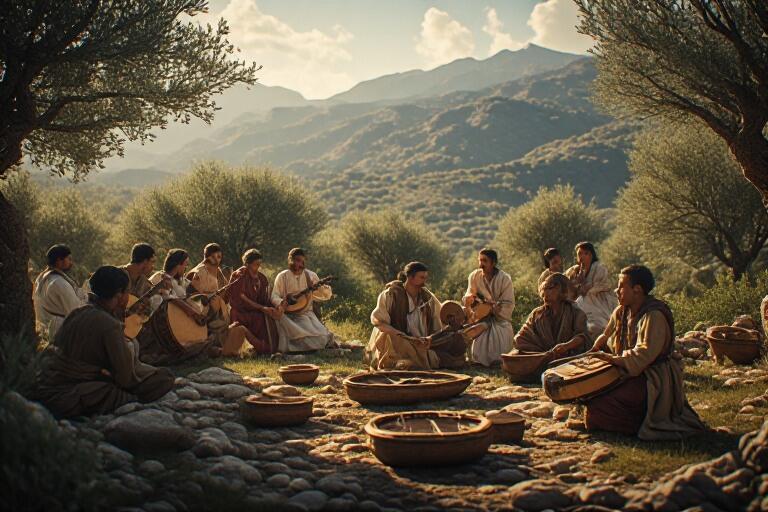
Another important Cretan tradition is Rizitika, a type of traditional song associated especially with the mountainous areas of western Crete and the White Mountains. The name is connected with the word for roots, reflecting their connection with the foothills and mountain communities. Traditional Rizitika are often performed without instruments, making them particularly suitable for people who are working with their hands.
One singer may begin, with others joining in or responding. The strong voices of several people singing together can carry across the olive groves and create a powerful atmosphere. Because harvesting requires constant physical work, an unaccompanied song does not require anyone to stop working to play an instrument such as the Cretan lyra.
The story of Erotokritos
Cretan musical culture is also closely connected with Erotokritos, the famous seventeenth-century epic poem by Vitsentzos Kornaros. The long romantic and heroic story has been passed down through generations, and parts of its verses and melodies remain familiar in Cretan culture. Like other traditional material, passages from Erotokritos can be sung or recited in social and working environments.
For olive harvesters, singing is about more than entertainment. It can help break the monotony of a long day, strengthen the feeling of community, and keep an old cultural tradition alive. Among the olive trees of Crete, the sounds of conversation, laughter, birds, tools, and traditional singing can become part of the harvest itself. The music may change from one village or group to another, but the tradition of sharing songs and verses remains an important part of Cretan rural culture.